NASUBI is a survival reality show concept that became infamous late 1990s Japan, where comedian Tomoaki Hamaguchi—nicknamed Nasubi—was confined to an apartment and forced to live off magazine swepstakes winnings while being filmed continuously without his full knowledge of how widely the footage would be broadcast.
What makes the NASUBI story compelling is how it exposes the tension between play and exploitation: you watch contestants or players navigate systems designed to entertain, but the original show’s real-world subject had no script, no safety net, and no clear endpoint—a setup that raises questions about consent, entertainment ethics, and where the line between game and abuse actually falls.
About NASUBI
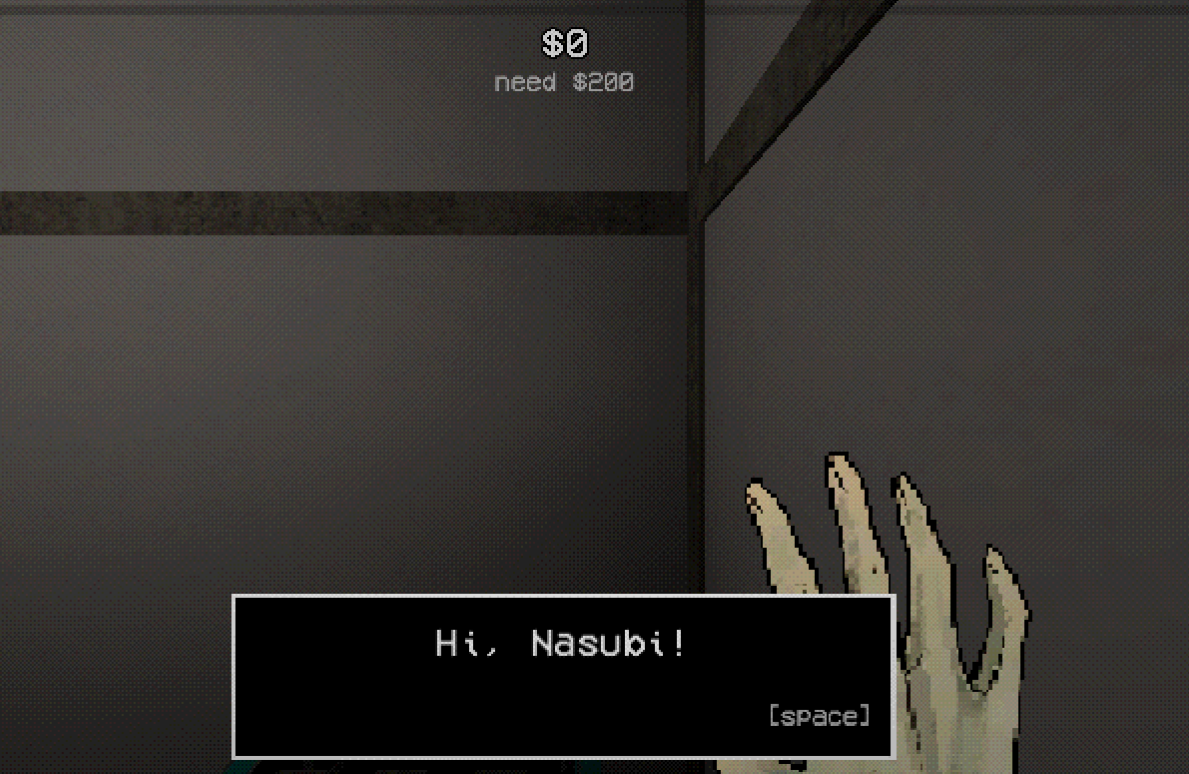
NASUBI is an indie psychological endurance game that places you naked and alone in an empty room with no food and no one to talk to. Your only connection to the outside world is an old rotary phone. The game is built around forced isolation and the discomfort of having almost nothing to do—no busy environment to distract you, no tasks to complete, just the room, the phone, and time moving slowly.
The premise comes from a real late-1990s Japanese television experiment involving comedian Tomoaki Hamatsu, known as Nasubi—a stage name meaning “eggplant,” tied to his long face. At 22, Hamatsu auditioned for a reality program, was blindfolded and taken to a small apartment, and told to survive by entering mail-in sweepstakes until he won roughly 1 million yen in prizes. He did not know that millions were watching his recorded daily life. He stayed335 days, isolated, waiting for prizes and trying to meet ordinary needs through chance. That history gives the game its weight: the room is modeled on a situation where hunger, boredom, and private silence became entertainment.
A Room With Almost Nothing
The game begins in a nearly empty room. You have no food set aside and no one to speak to. An old rotary phone is your only apparent connection to the outside.
The lack of objects is central to the experience. With little to occupy your attention, time slows and small changes matter. Every phone call starts to feel important. The room feels smaller. Your own thoughts become part of the problem.
Features of NASUBI
- Forced isolation: The game reflects Hamatsu’s 335 days alone, using confinement and quiet rather than a large world or constant threats.
- Survival through chance: In the original experiment, progress depended on sweepstakes prizes. That uncertainty turns ordinary needs into something unstable.
- Being watched: Hamatsu did not know his life was broadcast to millions. Like The Truman Show, the unease comes not only from the room, but from the unseen audience beyond it.
- A reluctant subject: Nasubi was not simply playing a character with control over his circumstances. The premise feels less like a challenge and more like an experiment imposed on you.
How To Play NASUBI
You play by observing the room, enduring quiet periods, and using the rotary phone when it matters. There is no busy world or constant stream of tasks. What matters is what interrupts the silence.
-
Look around first. Learn what is in the room and notice anything that changes. Small details matter when there is almost nothing else to focus on.
-
Use the phone carefully. The phone is your link to the outside. Pay attention to calls and what they may imply, even when no immediate explanation follows.
-
Expect long gaps. NASUBI does not fill every moment with action. Stay alert during silence rather than assuming nothing is happening.
-
Watch for the unusual. If something seems out of place, stop and examine it. The experience becomes harder once the empty room starts to feel familiar.
- Alone II — Its focus on facing danger without companionship makes it a natural follow-up for players drawn to NASUBI’s oppressive solitude.
- Five Nights At Old Toy Factory 2020 — The confined survival setup and tension built through long, watchful stretches echo NASUBI’s fear of waiting alone for the next unsettling event.
Enjoy!

 New


Discuss Nasubi